This simply works as a guide and helps you to connect with doctors of your choice. Please confirm the doctor’s availability before leaving your premises.
Emergency bariatric care may be needed if you experience severe abdominal pain, complications from weight loss surgery, or symptoms of nutritional deficiencies.
Bariatric surgery is a life-changing decision that goes beyond just physical transformation. It also involves a profound emotional journey. Let’s explore the emotional aspects of bariatric surgery with suggestions on how to navigate this transformative process.
The Decision
The decision to pursue bariatric surgery is not one that is taken lightly. It often stems from a deep well of emotions – a desire for improved health, increased confidence, and a better quality of life. This journey begins with a courageous decision, driven by the hope for a healthier future.
Pre-Surgery Emotions
As the surgery date approaches, a mix of emotions washes over individuals. There’s excitement about the positive changes that lie ahead, but there can also be anxiety and fear of the unknown. It’s during this phase that emotional support from friends, family, or support groups becomes invaluable. The reassurance and understanding of others who have walked this path are like a comforting hand on your shoulder.
The Surgery Day
The day of surgery can be emotionally intense. The anticipation, the sterile surroundings, and the realization that this is the moment of transformation can trigger a whirlwind of emotions. It’s here that healthcare providers play a vital role, offering both medical expertise and the human touch to ease anxieties and provide guidance.
Post-Surgery Adjustments
Following bariatric surgery, individuals often experience a rollercoaster of emotions. Physical discomfort and adjusting to new eating habits can be challenging. It’s important to remember that this journey is a process, and patience and self-compassion are essential. Every step forward, no matter how small, is a victory.
Body Image and Self-Esteem
As weight loss becomes apparent, changes in body image and self-esteem are common. Rapid weight loss can leave individuals feeling like they’re in a new body, which can be emotionally challenging. It’s important to cultivate a positive self-image and self-worth throughout the journey. Remember, the way you feel about yourself is just as important as the way you look.
Support Systems
Support, both emotional and practical, is a cornerstone of bariatric success. Connecting with others who share a similar journey can provide solace and encouragement. Support groups, whether in person or online, can become a lifeline, offering understanding and a sense of community. Additionally, healthcare providers play a crucial role in offering emotional support and guidance.
Coping with Changes
Emotional challenges are part of the journey, and there are ways to cope. Journaling your thoughts and feelings can be cathartic. Mindfulness techniques can help you stay present and manage stress. If emotional challenges become overwhelming, professional counseling is a valuable resource. It’s okay to seek help; you’re not alone in this.
Celebrating Milestones
Along this journey, it’s essential to celebrate more than just the numbers on the scale. Non-scale victories, like improved health, increased energy, and a better quality of life, deserve recognition. Setting and achieving realistic goals during your recovery is a powerful way to stay motivated.
Bariatric surgery is not just a physical transformation; it’s an emotional journey filled with ups and downs. Remember that it’s okay to experience a range of emotions. Seek support, be patient with yourself, and celebrate your progress along the way. Your emotional well-being is an essential part of your bariatric success.
As you navigate the emotional side of bariatric surgery, know that you’re on a path to a healthier, happier, and more fulfilling life. This journey is not just about changing your body; it’s about transforming your life. Embrace it, and remember, you are not alone.
Healthy Hugs,
About the Author: Sheri Burkeis a Registered Holistic Nutritionist and Bariatric Surgery Coordinator at International Patient Facilitators in Tijuana and Cancun, Mexico. She has worked with bariatric surgery clients for over 10 years and especially enjoys providing nutritional guidance to pre and post bariatric clients. In her free time, she enjoys spending time with her husband and two teens and cooking up a nutritional storm in the kitchen.
In the journey towards better health and wellness, protein is the cornerstone of success for many of us. Protein shakes have become an essential part of our daily routine, aiding us in meeting our protein goals. But not all protein shakes are created equal.
Today, let’s explore the importance of choosing the right protein shake, with a gentle spotlight on the “Bariatric Expert” protein shake, which boasts the magic of Prohydrolase® for Protein Digestion.
Why Protein Shakes Matter:
For bariatric patients, protein is the superstar of nutrition. It supports healing, muscle preservation, and overall vitality. But here’s the catch: post-surgery, our bodies may struggle to digest and absorb proteins efficiently. That’s where protein shakes come in. They’re a convenient way to ensure we meet our protein targets.
The Prohydrolase® Advantage:
What makes the “Bariatric Expert” protein shake stand out? It’s the inclusion of Prohydrolase® for Protein Digestion. This superhero enzyme blend is a game-changer for bariatric patients. Here’s why:
Enhanced Absorption: Prohydrolase® is like a key that unlocks the door to better protein absorption. It breaks down protein into smaller, more digestible peptides, making it easier for your body to absorb and utilize.
Reduced Discomfort: Many of us have experienced discomfort after a regular protein shake. Prohydrolase® helps reduce bloating and digestive discomfort, which can be a common issue for bariatric patients.
Faster Recovery: Whether you’re hitting the gym or just keeping up with daily life, the right protein shake can aid in muscle recovery and overall wellness.
The “Bariatric Expert” Protein Shake:
Why do we recommend the “Bariatric Expert” protein shake? It’s more than just the Prohydrolase® advantage. This shake is designed with bariatric patients in mind:
Protein Packed: Each serving contains a generous 26 grams of protein, helping you meet your daily requirements with ease.
Stevia Sweetened: It’s sweetened with stevia, a natural, bariatric-friendly sweetener that won’t spike your sugar levels or lead to unwanted cravings.
Convenient and Delicious: It’s an on-the-go solution that’s delicious and easy to incorporate into your daily routine.
Available at Your Fingertips: You can find the “Bariatric Expert” protein shake at www.bariatricfoodexpert.com, a trusted source for bariatric-friendly products.
Choosing Wisely for Your Bariatric Journey:
When selecting a protein shake, it’s more than just reading the label. Consider the ingredients and what sets it apart. Prohydrolase® and the thoughtful design of the “Bariatric Expert” shake make it a valuable addition to your post-surgery life.
Your bariatric journey deserves the best, and choosing the right protein shake is a step in the right direction. It’s not just about meeting your protein goals; it’s about optimizing your nutrition for lasting success.
Stay well, stay informed, and keep embracing the path to better health.
Healthy Hugs,
About the Author: Sheri Burkeis a Registered Holistic Nutritionist and Bariatric Surgery Coordinator at International Patient Facilitators in Tijuana and Cancun, Mexico. She has worked with bariatric surgery clients for over 10 years and especially enjoys providing nutritional guidance to pre and post bariatric clients. In her free time, she enjoys spending time with her husband and two teens and cooking up a nutritional storm in the kitchen.
In the realm of bariatric health, the journey to comprehend vital nutrients often leads to questions about one powerful player: Vitamin D. Today, it’s my plan to simplify the significance of this sunshine vitamin and its critical role in the context of bariatric health.
Why Vitamin D Matters:
Vitamin D is like a supportive friend for your entire body. It’s essential for maintaining strong bones, supporting a robust immune system, and regulating mood. Bariatric patients, in particular, benefit from a closer look at vitamin D because:
Bone Health: After weight loss surgery, maintaining strong bones is a priority. Vitamin D ensures that your body can absorb calcium effectively, which is crucial for bone health.
Immune Support: A well-functioning immune system is essential for everyone but especially vital for bariatric patients. Vitamin D helps strengthen the body’s defenses.
Mood and Well-being: Many bariatric patients face changes in mood. Vitamin D plays a role in managing mood and reducing symptoms of depression.
Weight Management: There’s a link between vitamin D levels and weight management. Ensuring you have adequate vitamin D can help support your weight loss goals.
The Vitamin D Sources:
Vitamin D comes from a few primary sources:
Sunshine: Your skin produces vitamin D when exposed to sunlight. For bariatric patients, a short daily walk can be an excellent way to boost your levels.
Diet: Some foods contain vitamin D, including fatty fish like salmon, eggs, and fortified products like milk and cereal.
Supplements: Many bariatric patients need vitamin D supplements to maintain adequate levels.
Vitamin D and Bariatric Health:
Bariatric patients often face challenges in absorbing nutrients. This can lead to deficiencies, including vitamin D. Regular monitoring through blood tests is crucial to ensure you’re maintaining healthy levels.
Vitamin D isn’t a complex puzzle but a crucial piece of the bariatric health journey. By simplifying its importance and highlighting the sources and role it plays, my goal is to empower you to make informed choices.
Remember, a bit of sunshine, a balanced diet, and possibly a supplement can keep your vitamin D levels in the sunny zone, supporting your path to better health.
For high-quality vitamin D, specifically formulated for bariatric patients, visit this CLICK
Healthy Hugs,
About the Author: Sheri Burkeis a Registered Holistic Nutritionist and Bariatric Surgery Coordinator at International Patient Facilitators in Tijuana and Cancun, Mexico. She has worked with bariatric surgery clients for over 10 years and especially enjoys providing nutritional guidance to pre and post bariatric clients. In her free time, she enjoys spending time with her husband and two teens and cooking up a nutritional storm in the kitchen.
I hope this message finds you in good health and high spirits on your unique journeys to wellness. Today, I want to delve into a topic that has personally resonated with me – mindful eating.
When you embark on the path of bariatric surgery, you make a profound commitment to your health and well-being. It’s a journey of transformation that goes beyond physical changes; it’s about nurturing a wholesome relationship with food, body, and self. Mindful eating is a concept that aligns beautifully with this commitment and offers invaluable insights into our hunger and fullness cues.
The Heart of Mindful Eating
Mindful eating is not a diet; it’s a way of reconnecting with the sensory experience of eating. It’s about savoring each bite, fully engaging with the flavors, textures, and aromas of our food. But it’s also about tuning into our body’s signals – the gentle cues of hunger and the contented sense of fullness.
Why is Mindful Eating Important?
For those of us who are conscious of our health and well-being, mindful eating takes on great significance. It helps us recognize the subtle cues that indicate we’ve had enough. Especially after certain experiences, it’s easy to misinterpret our body’s signals. We might still have food on our plates, but our stomachs are saying, “I’m satisfied.” Being in tune with these cues can prevent uncomfortable overeating and promote healthier portion control.
Cultivating a Healthy Relationship with Food
Many of us have complex histories with food, often marked by emotional connections or using food as a source of comfort. Mindful eating encourages us to embrace food without judgment, allowing us to appreciate its nourishing qualities while reducing the emotional charge.
Enhancing Nutrient Intake
Every bite we take matters. Mindful eating helps us make the most of our food intake by ensuring that we choose nutrient-dense options and savor them fully. This can aid in better nutrient absorption and overall health.
How to Practice Mindful Eating
Engage Your Senses: Before you take a bite, pause to appreciate the appearance, smell, and texture of your food. Allow your senses to fully immerse you in the experience.
Eat Slowly: Put your fork down between bites. Savor the flavors in your mouth. Eating slowly gives your body time to send those vital fullness signals.
Listen to Your Body: Pay attention to your hunger and fullness cues. Are you eating because you’re truly hungry, or is it out of habit or emotion? Stop when you’re satisfied, not when your plate is empty.
Eliminate Distractions: Turn off the TV, put away your phone, and create a peaceful eating environment. This allows you to focus entirely on your meal.
Practice Gratitude: Take a moment to express gratitude for your food and the nourishment it provides. This can be a powerful way to shift your mindset around eating.
Forgive Yourself: If you have moments where you eat mindlessly or slip back into old habits, practice self-compassion. Remember, mindful eating is a journey, not a destination.
Mindful eating is a friendly companion on our path to health and well-being. It’s not about perfection but rather about embracing the imperfect, ever-evolving journey we’re on. By paying close attention to our hunger and fullness cues, we can prevent overeating, nurture a healthy relationship with food, and make the most of each nourishing bite.
I encourage you to explore mindful eating at your own pace. It’s a practice that can enrich your journey and help you build a more profound connection with the sustenance that fuels your transformation.
Healthy Hugs,
About the Author: Sheri Burkeis a Registered Holistic Nutritionist and Bariatric Surgery Coordinator at International Patient Facilitators in Tijuana and Cancun, Mexico. She has worked with bariatric surgery clients for over 10 years and especially enjoys providing nutritional guidance to pre and post bariatric clients. In her free time, she enjoys spending time with her husband and two teens and cooking up a nutritional storm in the kitchen.
If you need any assistance with bariatric recipes or food plans, download the App “Bariatric Expert”. I’ve uploaded free recipes and menus to help you along your journey with all the macronutrient breakdowns there to support you and your goals.
Navigating the path of bariatric surgery involves making conscious choices that support your health and well-being. A crucial tool in this journey is the nutrition label, providing a wealth of information about the foods you consume. Understanding how to decipher these labels empowers you to make informed choices that align with your post-surgery goals. In this blog, we’ll unravel the mysteries of nutrition labels, helping you take charge of your diet and nourish your body effectively.
Reading the Serving Size and Servings Per Container: The foundation of decoding a nutrition label begins with the serving size and servings per container. This information sets the stage for accurate nutrient evaluation. Adjusting portions to your bariatric needs ensures you’re consuming an appropriate amount of nutrients while preventing overconsumption. Remember, your portion sizes may differ from those stated on the label, so use this as a guide for adaptation.
Calories: Understanding calorie content is vital in your weight management journey. The number of calories per serving indicates the energy you’re consuming. For bariatric patients, it’s essential to prioritize nutrient-dense options that offer maximum nourishment for the calories consumed. This knowledge enables you to make choices that align with your calorie goals and promote steady weight loss.
Protein Content: Protein is the cornerstone of the bariatric diet. When analyzing nutrition labels, focus on the protein content per serving. Adequate protein intake supports muscle preservation, boosts metabolism, and promotes a feeling of fullness. Look for foods that provide a substantial amount of protein while keeping an eye on other nutrients.
Carbohydrates: Carbohydrates play a role in blood sugar management and overall health. Pay attention to the breakdown of carbohydrates into sugar, fiber, and total carbs. For bariatric patients, opting for foods higher in fiber and lower in sugar can help prevent rapid spikes in blood sugar levels, supporting balanced energy and stable hunger.
Fats: The types of fats in your diet matter greatly. Evaluate the saturated, unsaturated, and trans fat content on the label. Bariatric patients should prioritize unsaturated fats while minimizing saturated and trans fats. Incorporating healthy fats supports heart health, absorption of fat-soluble vitamins, and overall well-being.
Sodium (Salt): Monitoring sodium intake is crucial, particularly post-surgery. Excessive sodium can lead to water retention and impact blood pressure. Check the sodium content per serving and choose options that are lower in sodium. This practice aligns with your goal of maintaining balanced fluid levels and overall cardiovascular health.
Vitamins and Minerals: While many nutrition labels don’t provide a comprehensive breakdown of vitamins and minerals, they may highlight certain essential nutrients. Keep an eye out for nutrients like calcium, iron, and vitamins, especially those you need to prioritize in your bariatric journey. Supplementing wisely can help bridge nutritional gaps.
Decoding nutrition labels empowers you to make choices that reflect your bariatric goals. Armed with this knowledge, you can navigate the supermarket aisles with confidence, selecting foods that nourish your body while aligning with your post-surgery needs. Embrace the information on nutrition labels as your ally in achieving optimal health and a successful bariatric journey. Remember, every choice you make is a step toward a healthier you.
If you need any assistance with bariatric recipes or food plans, download the App “Bariatric Expert”. I’ve uploaded free recipes and menus to help you along your journey with all the macronutrient breakdowns there to support you and your goals.
Healthy Hugs,
About the Author: Sheri Burkeis a Registered Holistic Nutritionist and Bariatric Surgery Coordinator at International Patient Facilitators in Tijuana and Cancun, Mexico. She has worked with bariatric surgery clients for over 10 years and especially enjoys providing nutritional guidance to pre and post bariatric clients. In her free time, she enjoys spending time with her husband and two teens and cooking up a nutritional storm in the kitchen.
Embarking on a bariatric journey is a transformative experience, and one that requires dedicated attention to your health and well-being. One critical aspect often overlooked is the role of vitamins and minerals in supporting your post-surgery success. Today, we’re delving into the importance of vitamin D3 for bariatric patients, and I’m excited to introduce you to a trusted source for top-quality supplements.
Why Vitamin D3 Matters: Vitamin D3, often referred to as the “sunshine vitamin,” is a powerhouse nutrient that plays a pivotal role in your health journey. After bariatric surgery, your body’s ability to absorb essential nutrients may be altered. Vitamin D3 is crucial for several reasons:
Bone Health: Vitamin D3 is instrumental in calcium absorption, essential for maintaining strong bones and preventing osteoporosis—a concern for many bariatric patients.
Immune Support: Adequate vitamin D3 levels have been linked to a strengthened immune system, which is especially important post-surgery when your body needs to heal and adapt.
Mood and Mental Health: Emerging research suggests a connection between vitamin D3 deficiency and mood disorders. Ensuring optimal levels may contribute to emotional well-being.
Weight Management: Vitamin D3 deficiency has been linked to weight gain and difficulty in shedding excess pounds. Maintaining adequate levels may support your ongoing weight management efforts.
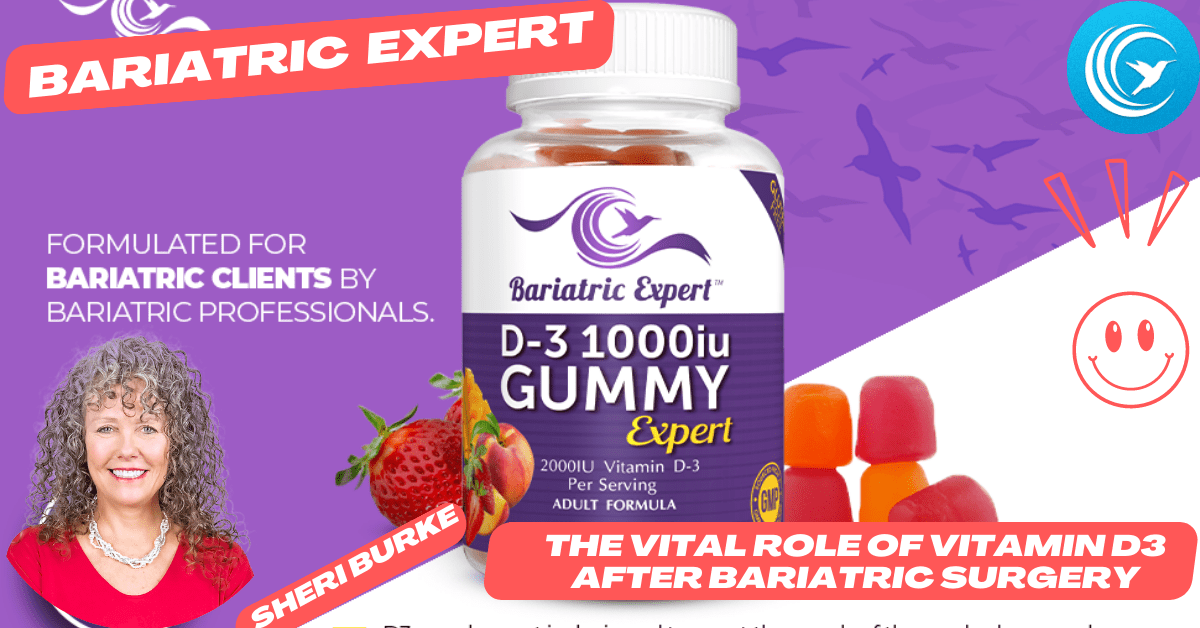
Introducing Bariatric Expert’s Vitamin D3: I’m thrilled to introduce you to an exceptional source for your vitamin D3 needs: Bariatric Expert’s Vitamin D3 supplement, available at www.bariatricfoodexpert.comWhat sets this supplement apart is its commitment to quality, potency, and suitability for bariatric patients. It tastes great and is easy to take, digest, absorb and assimilate.
High Potency: Bariatric Expert’s Vitamin D3 offers a potent dose of this crucial nutrient, ensuring you get the maximum benefit.
Easy Absorption: After bariatric surgery, your body’s ability to absorb nutrients may be compromised. Bariatric Expert’s Vitamin D3 is carefully formulated for optimal absorption, giving you the confidence that you’re getting what you need.
Medical Expertise: Bariatric Expert understands the unique needs of bariatric patients. Their Vitamin D3 supplement is designed with your journey in mind, offering targeted support during your recovery and beyond.
Quality Assurance: When it comes to your health, quality matters. Bariatric Expert’s Vitamin D3 is rigorously tested to meet the highest standards, giving you peace of mind with every dose.
As you continue on your bariatric journey, remember that every choice you make impacts your progress. Ensuring you provide your body with the necessary nutrients, like vitamin D3, is essential. I encourage you to explore Bariatric Expert’s Vitamin D3 supplement—a partner in your commitment to health.
Visit www.bariatricfoodexpert.com to discover this exceptional supplement and take another confident step toward your optimal well-being.
Yours in health and support.
Healthy Hugs,
About the Author: Sheri Burkeis a Registered Holistic Nutritionist and Bariatric Surgery Coordinator at International Patient Facilitators in Tijuana and Cancun, Mexico. She has worked with bariatric surgery clients for over 10 years and especially enjoys providing nutritional guidance to pre and post bariatric clients. In her free time, she enjoys spending time with her husband and two teens and cooking up a nutritional storm in the kitchen.